API tracks the development of policy and legislation, anticipates potential effects on the sector and offers relevant insights to guide stakeholder decisions.
A Detailed Database of Laws, Policies and Regulation that Curates Incentives, Compliance, and Penalties to Guide Investments in Innovation in Nigeria.
Periodic Updates on Policy Development in Digital Economy and Digital Rights.
Strategy, Advocacy and Stakeholder Engagement
Policy Development and Advocacy
We provide up-to-date reports on policy development, specialised advocacy or issue-based events to support policy-making.
Policy Research, Consensus Building and Stakeholder Alignment
Advocacy Design and Implementation
Strategic Communication and Advocacy Campaign Management
Compliance Support
We support organisations to plan and execute cost-effective frameworks for fulfilling regulatory requirements and meeting policy obligations for operating in Nigeria.
Bespoke Customisation of Templates and Regulatory Documents.
Extensive Guidance on Process, Hidden Costs, and Administrative Hurdles
Expedited Service for Regulatory Compliance, Expansion Management and Compliance Support
FREE RESOURCES
Political Economy of Green Jobs
This political economy analysis asks why Nigeria’s ambitious green-jobs agenda has not yet translated into employment at scale, and what it would take politically to change that. It looks past the technical case for the transition to the incentives, institutions and power relations that actually govern whether policy is designed, funded and delivered. Its central finding is that the binding constraints are political and institutional rather than technical: a hydrocarbon-based political economy that rewards the protection of oil rents, an institutional landscape crowded with overlapping mandates and weak coordination, and a set of governance risks, from rent-seeking in procurement to the short horizons of the electoral cycle, that quietly shape which programmes get built and who benefits.
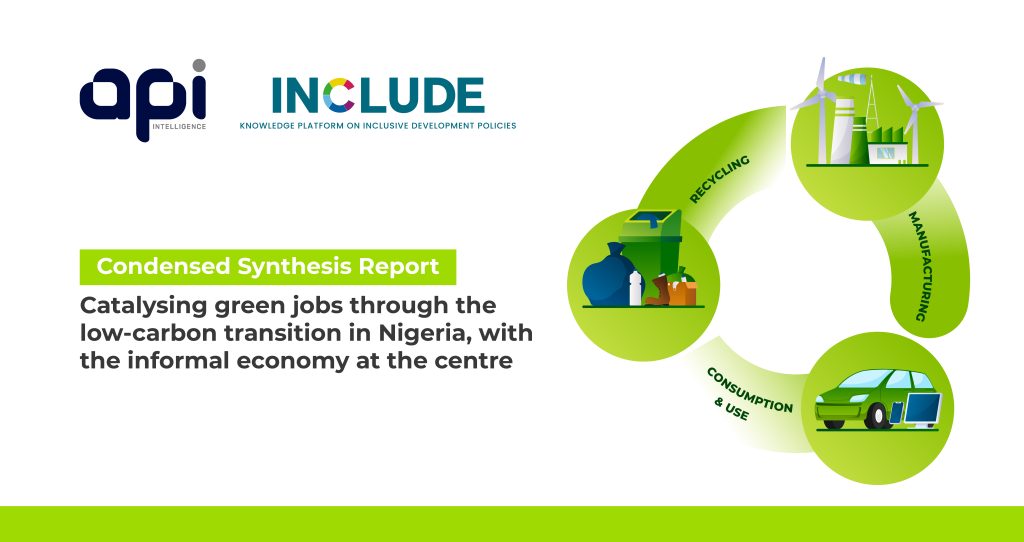
Nigeria faces acute climate vulnerabilities while grappling with high youth unemployment and the urgent need to diversify an oil-dependent economy. This synthesis draws on key informant interviews with stakeholders across government, civil society, the private sector and the informal economy, alongside a review of national policy and the research literature. Respondents recognised Nigeria’s policy frameworks, including the Nationally Determined Contributions and the net-zero pledge for 2060, but pointed consistently to a gap between policy intent and grassroots reality.
This study asks whether Nigeria’s low-carbon transition can be made to create green jobs, and finds that the obstacle is not ambition but integration. The country has assembled a comparatively strong architecture of energy and climate policy, yet energy, labour and education policy are not aligned, labour considerations sit at the margin of energy planning, and the institutions meant to coordinate the whole remain weak where it matters most. The transition is constrained less by what is on paper than by the machinery to deliver it.
Crafting innovative policies that shape and transform the African business landscape, through research, critical analysis and intelligence tracking across the continent.